These are the two Republicans who want to be your next governor
Last night, News on 6 and News 9 broadcasted a debate between Gentner Drummond and Mike Mazzei. You can watch the whole debate on video and see a fact check on what was said on Oklahoma Watch on Wednesday.
My take: There are two leadership styles here and two different points of view. These two candidates aren’t similar. A common complaint is that candidates are all the same. That is not the case in this race. Pick an issue and they don’t seem to agree. That should make it easy for Republicans to choose on Aug. 25 on who will run against Rep. Cyndi Munson in November.
The latest on the deaths at the Tulsa Municipal Jail
In last week’s Index, the lead story was on the incredible journalism done by The Frontier and the Tulsa World, who uncovered details not previously known of the seven preventable deaths at the jail. The mayor announced the jail would close shortly after The Frontier published surveillance video of an inmate in his last hours.
Since then:
- The Tulsa World’s Corey Jones reported that the Tulsa County District Attorney Steve Kunzweiler has referred each case for individual investigation. Tulsa Police, which oversees the jail, didn’t previously forward any of its jail death investigations to his office.
- The Frontier’s Garrett Yalch, whose exclusive on the deaths published in March, quoted a police spokesman about the referrals, saying the department “followed its investigative policies and procedures at the time.”
This & That
- We need your blood: The Tulsa World’s Ashton Slaughter explains just how bad the national blood shortage is.
- Make sure your kids and their teachers get free subscriptions to the Tulsa World this school year. The executive editor explains how to sign up for the News for Students program.
- Sorry, the cruise from Tulsa to Memphis is sold out. The Tulsa World’s Bella Casey on when you can catch the next one.
- Abersons will come to your home and help you pack for a trip? That was one reason why the Tulsa clothing retailer was named to the 25 Favorite Clothing Stores Across the U.S., as picked by readers of the New York Times in this unlocked article.
Why does it seem like so many Gen-Z women are bankrolling their boyfriends’ lives?
This is a question asked in this New York Magazine story, which explores why a growing number of young women are paying for (and parenting) their male partners. Watch this preview on Instagram.
Quotable quotes
“Oklahoma cities should not be subjected to sweeping federal investigations based on a single zoning decision when the DOJ itself acknowledges it has made no determination that federal law was violated. The investigation is federal overreach of the first order.”
– Oklahoma Attorney General Gentner Drummond, who is also running for governor, about the Department of Justice’s announcement that it would investigate the rejection by Broken Arrow officials of a proposed mosque.
- The Islamic Society of Tulsa filed a discrimination lawsuit against Broken Arrow, in a report by the Tulsa Flyer’s Joe Tomlinson and Haley Samsel.
- That same reporting duo offered this in-depth report after spending 25 hours scanning and sorting documents, ultimately reviewing 11,496 records. The headline: Broken Arrow leaders were flooded with anti-Muslim emails on a proposed mosque. Here’s what they said behind closed doors.
AI in reality and in a movie series that keeps coming up
Tristan Harris, co-founder for the Center for Humane Technology and a technology ethicist, said this at the Milken Institute Global Conference in May.
The following dialogue is from the 1991 movie “Terminator 2,” between a T-800, played by Arnold Schwarzenegger; Sarah Connor, played by Linda Hamilton; and John Conner, played by Edward Furlong, in a script written by James Cameron and William Wisher Jr. Note the parallel to the former.
T-800: In three years, Cyberdyne will become the largest supplier of military computer systems. All Stealth bombers are upgraded with Cyberdyne computers, becoming fully unmanned. Afterwards they fly with a perfect operational record. The Skynet funding bill is passed. The system goes on-line on August 4, 1997. Human decisions are removed from strategic defense. Skynet begins to learn at a geometric rate. It becomes self-aware at 2:14 a.m. Eastern time, August 29. In a panic, they try to pull the plug.
Sarah Connor: Skynet fights back.
T-800: Yes. It launches its missiles against the targets in Russia.
John Connor: Why attack Russia? Aren’t they our friends now?
T-800: Because Skynet knows that the Russian counterattack will eliminate its enemies over here.
Sarah Connor: (sighs) Jesus.
A new series called A Tulsan you should know. Up first, Russell Cobb.
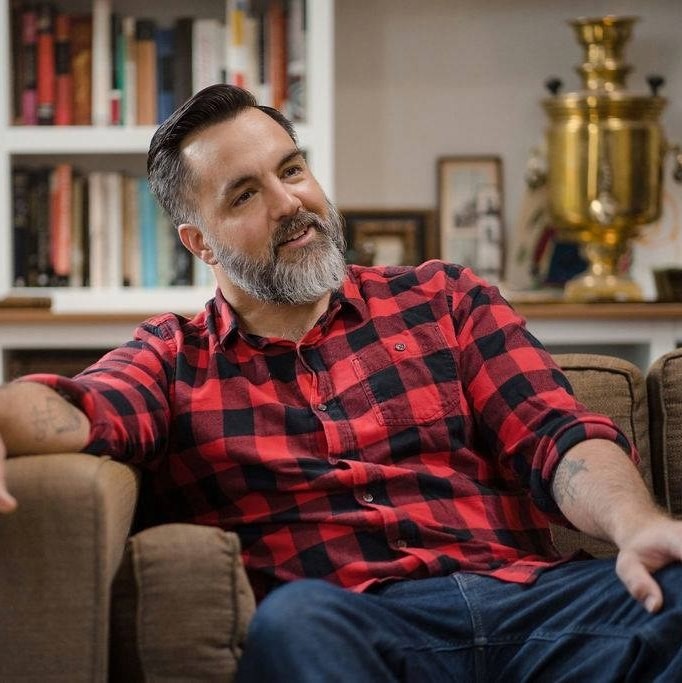
This is a new series where I introduce you to someone I think you should know. I ask them to share their beliefs and some personal stories. I wanted to start with Russell Cobb, who chronicles Oklahoma and Tulsa history in his Substack and in books.
> I never take stories at face value, especially if they are about Tulsa. I learned that the true story is often wilder and more interesting than the lore that gets circulated.
> I thought Tulsa had to be the most boring, middle of the road place in the world, growing up here from the 1980s to early 1990s. Do people in Toledo and Little Rock say the same thing about growing up there? Probably.
> Then I realized you could see the universe of American history in a grain of Tulsa sand. Just look at my backyard. Seriously. I grew up near 27th and Cincinnati in a quiet area of Maple Ridge. As they were building Gathering Place, I found out the whole area was allotted to a Mvskoke Warrior named Tuckabache. He had gone along the Trail of Tears, fought for the Union in the Civil War, and then came back to hunt and fish along the banks of the Arkansas River. He buried dozens of family members in a cemetery maybe 50 yards from my boyhood home. He may have been as old as 110 years old when he died in 1910. All these graves were dug up and removed to Oaklawn in 1921. It gives me chills just thinking about it.
> So many horror movies begin on the site of “an ancient Indian burial ground.” This was a modern Muscogee burial ground, and no one said anything! When I stumbled upon the story of Tuckabache, I started asking impertinent questions. I caught a lot of flak for it, and many of my relatives called my research “woke.” That’s when I realized I had a calling; it was like they say about pastors. Their job is to afflict the comfortable and comfort the afflicted.
> I jumped into some circles around social justice activism that I didn’t really understand. I realized there was a long history of historical silences in Tulsa and the nation that people had been pushing back against for a long time. Sometimes I didn’t feel welcome in these spaces. I thought I was going to get cancelled by Apollonia Pina, a Mvskoke scientist and activist. She later became my friend.
> How do you figure this stuff out, people often ask me? I just keep turning over pages, cross-checking my assumptions. Like Robert Caro said: “Turn over every damn page.”
> After I graduated from Cascia Hall in 1992, I wanted to get as far away from Tulsa as possible. I became fluent in Spanish and moved to Buenos Aires after college. People asked me about where I was from and I had to start explaining Oklahoma and its weird mix of rich culture, backwards politics, uneasy racial configurations. I realized it had more in common with parts of Latin America than it did with a state like, say, Idaho.
> I got a PhD specializing in Latin American literature but my curiosity always took me back to Tulsa. I knew my roots were firmly planted in the Oklahoma red dirt. I found I descended from illegal white intruders into Indian Territory on my mother’s side, and wily oilmen on my father’s side. My grandfather was one of the last true Tulsa wildcatters. He’d point to a spot on a road map and tell his crew “drill here!” The point wasn’t so much hitting oil as it was promoting the prospect of oil, attracting wealthy investors looking for a tax shelter.
> Learning all this history in adulthood made me understand why we keep finding ourselves getting bamboozled by powerful men, whether they be philanthropists or pastors, cryptobros or politicians. Tulsa, I believe, is the city of magical thinking, where people truly believe they can manifest a different reality. Sometimes that’s just a grift. But sometimes it creates some beautiful art, like what Leon Russell did with the Tulsa Sound or what Sterlin Harjo is doing now with “The Lowdown.”
> I’m entering my third act of my life and Tulsa is entering its third act as a city. It was a cowtown, then the Oil Capital; now we get to grow old together.
Bentonville is a 2-hour drive worth taking
We spent last weekend in Arkansas and I can’t wait to go back. I couldn’t help but walk the new addition to the Crystal Bridges Museum happy. I thought of the new study that came out recently that said regular arts and cultural engagement — including visiting galleries, attending concerts, singing and dancing — slows biological aging at the same rate as physical exercise. “People who engaged most frequently and across the widest variety of activities were roughly a year younger biologically than those who didn’t,” according to this unlocked article in the Wall Street Journal.
Here is a short list of recommendations in Bentonville. I will add more on the next trip.
- Walking the new Walmart headquarters, which is also a campus of hotels (we stayed at the AC Hotel), restaurants, retail and more.
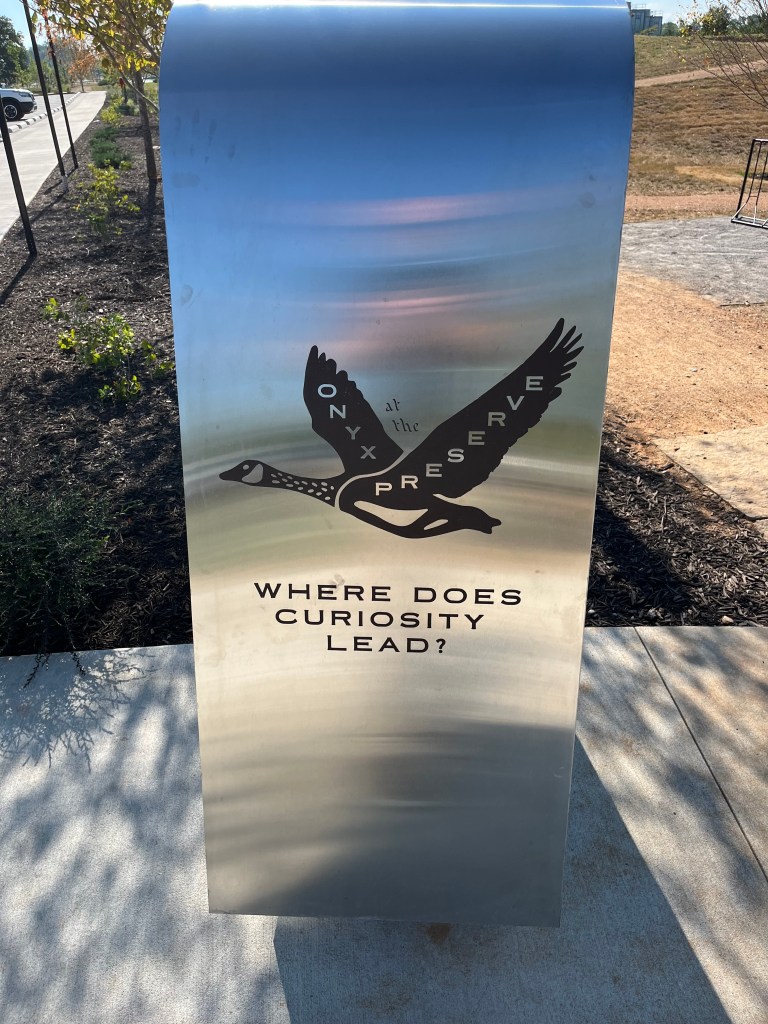
- The Onyx on the Preserve coffee shop on the campus (very cool old-school Star Wars bar vibes) that had great food.

- The Momentary’s exhibit of an 1980s-90s-era grocery store all done in felt.

- Conifer, the farm-to-table restaurant right along the town’s great downtown square.
- The Eddy, the cool bar in the fancy Compton Hotel.
- Once Upon A Time, a great antique book store with some first editions I’ve never seen before.
Thanks for reading. Forward to those who need to know what’s up.
There is no cavalry.
It’s up to us.
All together now. jc
P.S. The University of Tulsa’s Office of Civic Engagement, the Tulsa Press Club, Tulsa Flyer and Oklahoma Watch present Candidate Conversations on Aug. 11.
We have invited candidates Gentner Drummond, Mike Mazzei, Robert Franklin and James Taylor to share their visions for Oklahoma and to take questions from local journalists on the biggest issues in the state.
5:30 p.m.: Meet and greet the candidates.
6-6:45 p.m.: Governor candidates answer questions.
6:45-7:30 p.m.: Superintendent candidates answer questions.
The Collington Index is a free weekly news summary written by Jason Collington that explains quickly what’s important and interesting, shared in weekly wraps, popular lists, conversations and cheat sheets. Skim or go deep. A movement toward truth and understanding in Tulsa, Oklahoma. Subscribe for free on Substack to get an email newsletter each Tuesday morning. See the archive at collingtonindex.com.

